Thursday Read: The Upper Room - Where Fear Becomes Mission
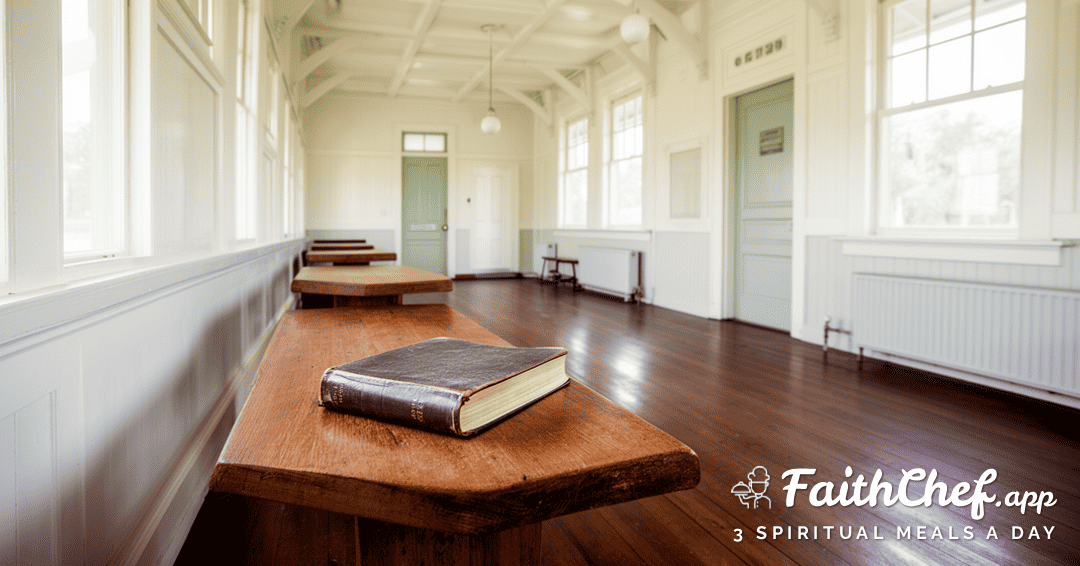
After Jesus ascended to heaven, the disciples returned to Jerusalem and gathered in an upper room. Acts 1:13-14 lists them by name - Peter, John, James, Andrew, Philip, Thomas, Bartholomew, Matthew, James son of Alphaeus, Simon the Zealot, and Judas son of James. The eleven remaining apostles, plus the women who followed Jesus, Mary his mother, and his brothers. About 120 people total (Acts 1:15), huddled together in one room.
These were the people who would change the world. They didn't look impressive - fishermen, tax collectors, political radicals, women with questionable pasts. They'd all abandoned Jesus when he was arrested. Peter had denied him publicly. Thomas had doubted the resurrection. They had no political power, no religious credentials, no military might, no institutional backing. Just a room full of ordinary people who'd encountered the risen Christ.
Jesus had told them to wait in Jerusalem for "the gift my Father promised" - the Holy Spirit who would give them power to be witnesses "in Jerusalem, and in all Judea and Samaria, and to the ends of the earth" (Acts 1:4-5, 8). So they waited. This wasn't passive idleness but active preparation. "They all joined together constantly in prayer, along with the women and Mary the mother of Jesus, and with his brothers" (Acts 1:14).
Notice the unity: "they all joined together." This same group had recently argued about which of them was greatest (Luke 22:24). James and John had tried to secure the best positions in Jesus's kingdom (Mark 10:35-37). The disciples had ethnic, political, and personal tensions - Simon the Zealot (anti-Roman revolutionary) and Matthew (former Roman tax collector) sitting in the same room took miraculous reconciliation. Yet they joined together in prayer.
This unity wasn't natural; it was supernatural. The resurrection had transformed competing disciples into unified community. They'd seen Jesus alive, received his commission, and heard his promise of the Spirit. Their experience of the risen Christ created bonds stronger than their differences. When you've encountered resurrection together, petty conflicts seem suddenly insignificant.
The upper room prayer meeting lasted about ten days - from Ascension (40 days after resurrection) to Pentecost (50 days after resurrection). Ten days of waiting, praying, and preparing for they didn't fully know what. This challenges modern expectations of instant results. We pray once and expect immediate answers. They prayed constantly for over a week before the Spirit came. Waiting was part of preparation.
During this time, they replaced Judas. Peter stood up and explained that Judas's betrayal and death fulfilled Scripture (Psalm 69:25, 109:8), so they needed to select someone to take his place. The requirements were specific: someone who'd been with them from Jesus's baptism through his ascension, who could testify to the resurrection (Acts 1:21-22). They nominated two men - Joseph called Barsabbas and Matthias. Then they prayed and cast lots, and the lot fell to Matthias.
This decision-making process is striking. They combined Scripture (recognizing what prophesied), reason (establishing requirements), prayer (seeking God's guidance), and providence (casting lots to discern God's choice). They didn't just vote democratically or let Peter decide autocratically. They sought God's will through multiple means, trusting that the sovereign God who raised Jesus would guide their selection.
The upper room became birthplace of the church. Not a cathedral or sanctuary but an ordinary room where ordinary people gathered to pray and wait. The church started small - 120 people in one room. No buildings, no budgets, no strategic plans, no institutional infrastructure. Just resurrection witnesses waiting for promised power.
This challenges how we think about church today. We emphasize size, resources, facilities, programs, and professional leadership. The early church had none of these. They had testimony about what they'd seen, promises about what was coming, and unity created by shared experience of the risen Christ. That was enough to transform the Roman Empire.
The upper room also demonstrates that fear and faith can coexist. The disciples gathered there partly from obedience (Jesus told them to wait) and partly from fear (they locked doors "for fear of the Jewish leaders" - John 20:19). They were both believing Jesus's promises and hiding from potential persecution. Fear didn't disqualify them from receiving the Spirit. God met them in their fear, not after they'd conquered it.
What's your upper room? Where do you gather with other believers to pray, wait, and prepare for what God is doing? Who are the unlikely people God has brought together in your community - people who shouldn't naturally get along but find unity through shared experience of Christ? Are you willing to wait when God says wait, even when you want immediate action?
The upper room season was temporary - it lasted only until Pentecost when the Spirit came and sent them out. But the preparation mattered. Those ten days of unified prayer created the foundation for the church's explosive growth. They learned to wait together, pray together, decide together, trust together. When the Spirit came, they were ready - not because they were impressive but because they'd prepared together.
If you're in an upper room season right now - waiting for promised breakthrough, preparing for unknown future, gathering with others who share your hope but not your certainty - don't despise the waiting. Use it to pray, unify, prepare, and position yourself for what God is about to do. The upper room precedes Pentecost. Preparation precedes power. Waiting precedes witness. Stay in your upper room until the Spirit comes.